
Private Label Manufacturing in Morocco

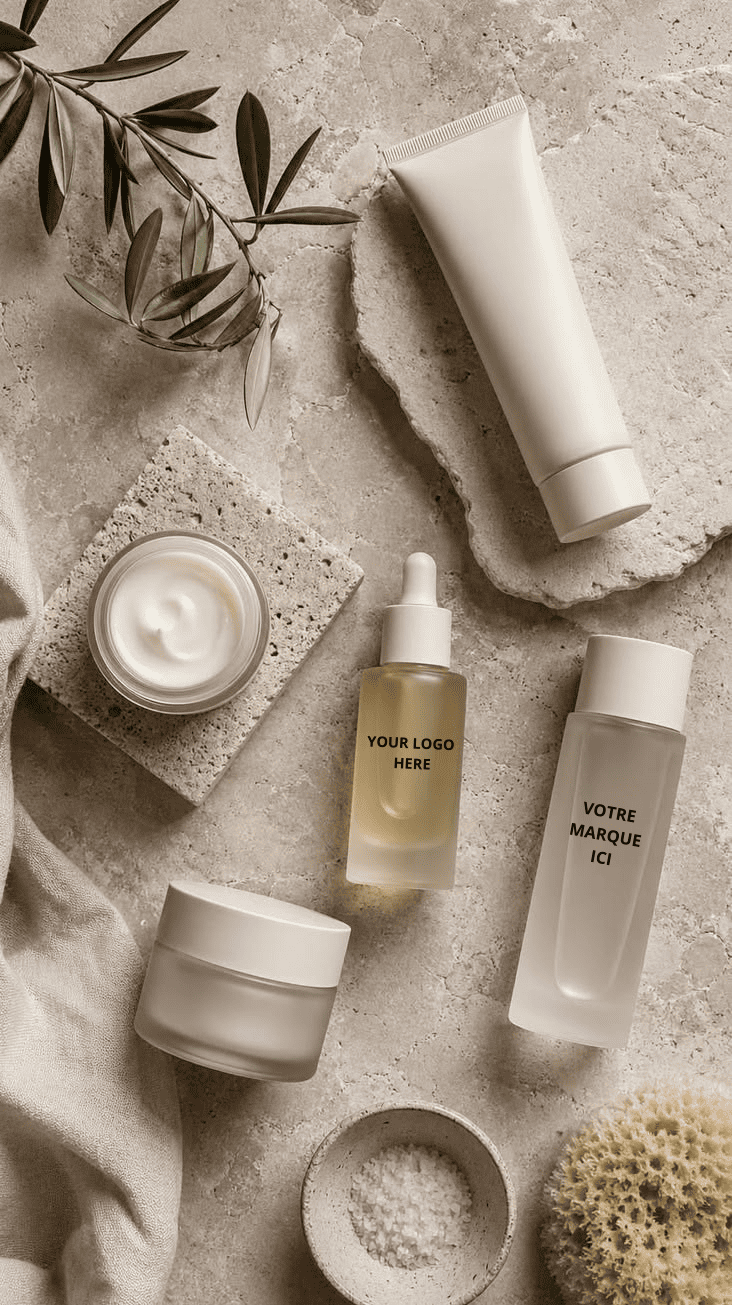
Do you want to launch your own brand of cosmetics, food products, or clothing without investing in a factory? The Private Label Manufacturing in Morocco allows you to sell products made by a professional manufacturer under your own name, logo, and packaging.
This business model appeals to entrepreneurs, distributors, and e-commerce retailers who want to expand their product range without managing production directly. Discover how it works, its advantages, the industries involved, and the steps to follow to prepare your project.
1. What Is Private Label Manufacturing?
Private label manufacturing involves having a product made by a specialized company and then marketing it under your own brand
The manufacturer handles production according to the agreed terms, while the client generally takes care of brand identity, marketing, and distribution. Depending on the supplier, the service may include the product, packaging, labels, and certain customizations.
It is useful to distinguish between two approaches:
- Private Label: The manufacturer generally offers an existing product or formula that the client markets under their own brand.
- Custom Manufacturing: The product is developed or adapted according to specific requirements, with particular specifications regarding its composition, texture, fragrance, or technical characteristics.
Services, lead times, and costs may therefore vary depending on the level of customization required.
2. Why Choose Private Label Manufacturing in Morocco?
Morocco offers several advantages for businesses looking to develop their own brand:
- Proximity to Europe: Trade can benefit from logistics connections suited to European markets.
- Locally sourced raw materials: Argan oil, ghassoul, olive oil, aromatic plants and other local resources can be incorporated into certain product ranges.
- Industrial expertise: Several industries benefit from specialized manufacturers.
- Costs to Consider: The final cost depends on order quantities, raw materials, packaging, technical requirements and transportation.
- Export Potential: Products manufactured in Morocco can be intended for various markets, subject to compliance with the applicable regulations.
Choosing a manufacturer should therefore not be based solely on the unit price, but also on product quality, reliability, lead times and regulatory compliance.
3. Which Industries Use Private Label Manufacturing?
Cosmetics and Natural Skincare
Vegetable oils, soaps, serums, creams, shampoos and hair masks can be marketed under your own brand. Some manufacturers offer existing formulations, while others develop customized products.
Food and Wellness Industry
Edible oils, spices, dates, honey, herbal teas and processed products can be developed under a private label, depending on the manufacturer's capabilities and applicable food safety requirements.
Textiles and Ready-to-Wear Clothing
Clothing, home textiles and workwear can be manufactured according to specified designs, materials and quantities.
Hygiene, Cleaning Products and Handicrafts
Cleaning products, certain hygiene items, leather goods and decorative objects can also be marketed under a private label.
Manufacturing conditions and regulatory requirements vary depending on the product category.
4. What Are the Advantages and Limitations of Private Label Manufacturing?
Private label manufacturing allows businesses to launch without directly investing in industrial infrastructure. It provides access to a manufacturer's expertise and enables businesses to allocate more resources to commercial development.
It can also facilitate the gradual launch of a product range when the manufacturer accepts quantities suited to the project's budget.
However, certain limitations should be anticipated:
- Minimum order quantities (MOQs) set by the manufacturer.
- Costs associated with packaging, labeling and customization.
- Development, approval and production lead times.
- Potential costs for testing, laboratory analyses and regulatory compliance.
- Dependence on the supplier for manufacturing and product supply.
It is also important to define confidentiality terms, formula usage rights and any exclusivity clauses in writing. Exclusivity is not automatic; it depends on the agreement reached between the parties.
5. How to Launch Your Private Label Brand in Morocco?
Here are the main steps to prepare your project:
- Define Your Project: Choose the products, target customers and intended market.
- Analyze the Competition: Compare prices, product features and customer expectations.
- Find Manufacturers: Check their experience, production capabilities and commercial terms.
- Evaluate the Samples: Assess the product's characteristics before approving production.
- Calculate the Budget: Include manufacturing, packaging, any required testing, transportation and marketing costs.
- Create Your Brand Identity: Develop the brand name, logo, labels and packaging.
- Ensure Regulatory Compliance: identifier les obligations applicables au produit et au marché visé avant sa commercialisation.
The minimum order quantity, known as MOQ (Minimum Order Quantity), varies depending on the manufacturer, product, packaging and level of customization.
Practical Example: Planning a Cosmetics Project
An entrepreneur wants to launch a range of three skincare products. Before placing an order, they need to determine the desired quantities for each product, compare manufacturers' offers, approve the samples and check the packaging costs.
They must also identify the technical documentation, testing and regulatory procedures required in their target market. This preparation helps compare quotations on an equivalent basis and avoid unexpected expenses.
6. What Regulatory Requirements Must Be Met?
Requirements depend on the type of product, the role of each party involved and the country in which the product will be marketed.
- Brand Protection: In Morocco, OMPIC is the main authority responsible for industrial property and trademark registration procedures. Visit the official website: OMPIC.
- Food Products: Food safety, traceability and labeling requirements must be checked with the relevant authorities. ONSSA publishes the applicable regulations for food industry establishments, among other guidelines: réglementation et autorisations de l’ONSSA.
- Cosmetic Products: Applicable requirements regarding product composition, safety, labeling, technical documentation and marketing authorization procedures should be verified.
- Export Requirements: Customs regulations, export documentation and the requirements of the destination country must be reviewed.
For cosmetics marketed in the European Union, EU regulations require, among other things, the appointment of a Responsible Person within the EU, a safety assessment, a Product Information File (PIF) and notification through the Cosmetic Products Notification Portal (CPNP), in accordance with the applicable requirements.
Official Source: Réglementation européenne sur les cosmétiques.
A technical data sheet, certification or document provided by the manufacturer does not automatically replace all regulatory requirements. It is therefore recommended to verify the applicable requirements before placing the product on the market.
7. How to Choose a Reliable Manufacturer?
Before selecting a supplier, consider several key criteria:
- Experience: Track record and expertise in the relevant industry.
- Production Capacity: Accepted production volumes and minimum order quantities (MOQs) per product.
- Quality: Inspection procedures, traceability, and nonconformity management.
- Documents: actual availability of technical data sheets, certificates, and other necessary documents.
- Pricing transparency prices, lead times, packaging, and services included in the quote.
- Contractual terms: responsibilities, confidentiality, ownership of formulas, and any exclusivity.
Request a detailed quote and compare several offers, making sure the same services are included. Whenever possible, evaluate samples before confirming an order.
FAQ: Frequently asked questions about white label in Morocco
1. What budget should you plan for to launch a white label brand?
The budget depends on the product, quantities, packaging, level of customization, any testing required, and transport and marketing costs. A detailed quote makes it possible to estimate the total cost of the project.
2. What is the minimum order quantity (MOQ)?
The MOQ is the minimum number of units a manufacturer agrees to produce for a single item. It varies depending on the product, raw materials, packaging, and manufacturing constraints.
3. Can a product’s formula be customized?
Yes, if the manufacturer offers this service. An existing formula can sometimes be adapted, whereas a new formulation generally requires a specific study, trials, and development time.
4. How long does it take to launch your brand?
The timeline depends on product availability, any development required, sample approval, packaging, order volume, and regulatory formalities.
5. Can products manufactured in Morocco be exported to Europe?
Yes, provided that the rules applicable to the product and the destination country are met. For cosmetics, specific safety, documentation, labeling, and notification requirements in particular must be taken into account.
6. Who owns the formula of a custom product?
It depends on the contract signed with the manufacturer. Ownership of the formula, usage rights, confidentiality, and any exclusivity terms must be defined in writing before development begins.
7. Can you launch a brand without owning a factory?
Yes. White label allows you to entrust manufacturing to a professional and sell the products under your own brand, without owning your own industrial infrastructure.
8. What documents should you request from the manufacturer?
The documents depend on the product and the target market. They may include technical data sheets, ingredient lists, safety data sheets, certificates, or test results. For regulated products, additional documents or assessments may be required.
9. How can you verify the reliability of a Moroccan manufacturer?
Check their experience, production capacity, quality procedures, available documents, and contractual terms. Compare several quotes and request samples whenever possible.
Conclusion
The Private Label Manufacturing in Morocco allows entrepreneurs and companies to develop their own product range without investing directly in a factory. It applies to several sectors, including cosmetics, food processing, textiles, and crafts.
The success of a project depends on choosing the right product, the reliability of the manufacturer, control of the budget, and compliance with regulatory obligations. Careful preparation makes it possible to compare offers, anticipate costs, and build a product range suited to the target market.


